
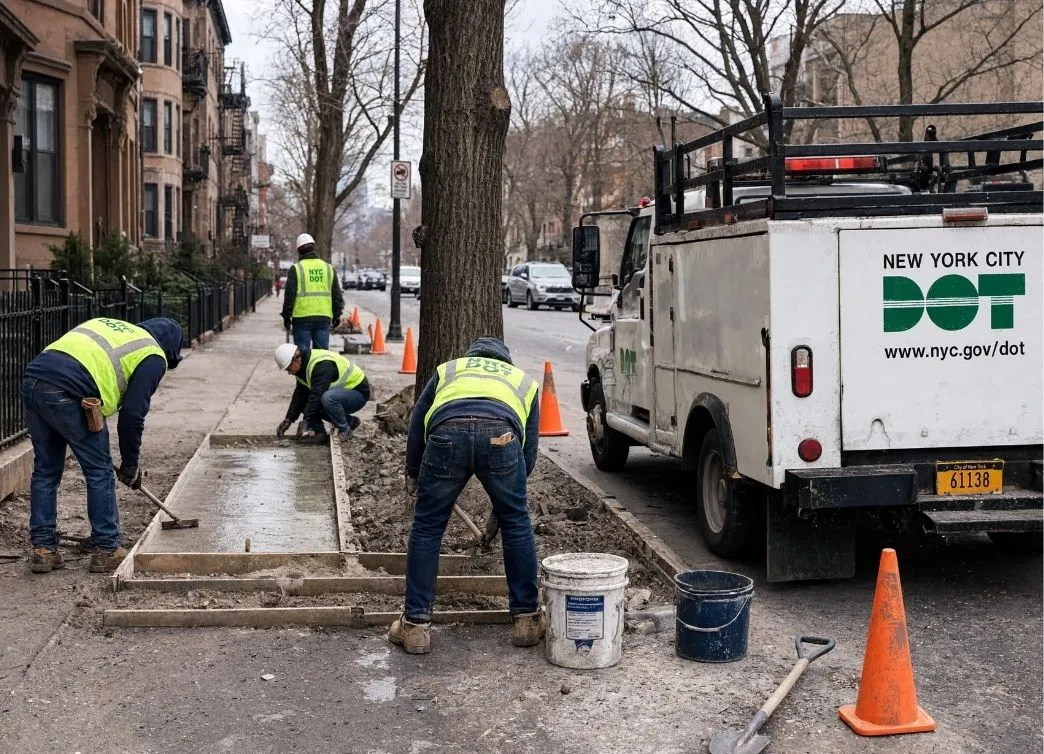
If you miss the 75-day deadline on a DOT sidewalk violation, the city takes over the repair, hires its own contractor, and bills you for the work through the Department of Finance. That bill almost always costs more than hiring your own contractor would have, and if it goes unpaid, it turns into a lien against your property. Once that lien is recorded, you can't sell or refinance until it's cleared. It's not a threat sitting in fine print somewhere. It's exactly how the process plays out for property owners across the five boroughs every year.
Here's the full picture of what city-performed sidewalk repair in NYC actually looks like, from the moment your window closes to the moment the bill lands in your mailbox.
What Happens When the City Takes Over Sidewalk Repair
Once a Notice of Sidewalk Violation is issued, you get 75 days to fix the defect yourself by hiring a licensed contractor. Miss that window, and NYC DOT performs the sidewalk repair through its own contracted program instead of leaving it up to you.
This isn't a quiet handoff. Before any crew shows up, you'll get formal notice that the city is stepping in. From there, the process moves in a fairly predictable order:
-
A city consultant or representative visits the property and photographs the current condition of the sidewalk.
-
That consultant marks which sidewalk flags need to be replaced, using your Preliminary Inspection Report (PIR) as the reference point.
-
The city's contractor performs the actual repair work.
-
Once the job is signed off, you get confirmation that the violation has been cleared from the County Clerk's records.
The catch is that you lose all say in who does the work, what it costs, and how it looks once it's done. City-managed repairs move on the city's timeline, not yours, and the invoice reflects that.
How the City Calculates Your Sidewalk Repair Bill
The math behind a city-performed sidewalk repair bill isn't a mystery, and you can actually estimate it yourself before the invoice arrives. Start with the square footage listed on your Preliminary Inspection Report, then multiply that number by the cost per square foot stated in the letter that came with your original violation notice.
A few details change the final number:
-
Standard sidewalk flags are billed at the 4-inch concrete rate.
-
Driveway aprons are billed at the heavier 7-inch concrete rate, since they need to handle vehicle weight.
-
If any flag on your PIR sketch is marked with an "X," DOT may replace it at no charge. That call is made on-site by a DDC engineer, not by you or your contractor.
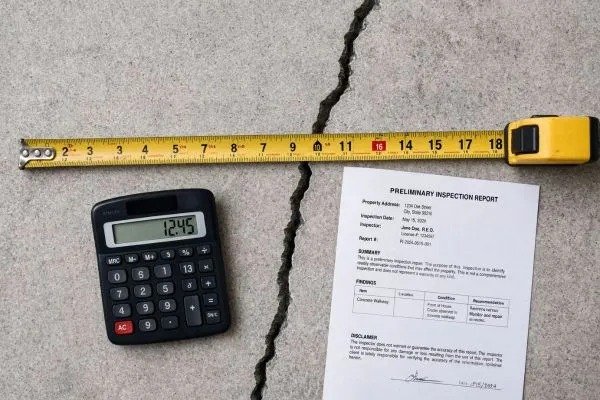
Keep in mind the final bill can run higher than your own back-of-envelope math if the crew finds additional sections that need work once they're already on-site. If you want a clearer sense of what private repair costs look like for comparison, our sidewalk repair cost guide breaks down current NYC pricing by square footage and repair type.
The Administrative Fee and Payment Timeline
Here's where a city sidewalk repair in NYC gets noticeably more expensive than a private one. Once the work wraps up, the Department of Finance sends the bill, and it isn't just the raw construction cost. An administrative fee, which can run up to 20% on top of the repair total, gets added automatically.
From there, you have 90 days to pay before the balance starts accruing interest tied to the current property tax rate. That interest doesn't pause while you're deciding what to do. It starts running the moment the 90-day window closes, and it keeps compounding until the bill is settled.
This is the part most owners don't see coming. A repair that might have cost a few thousand dollars through a private licensed contractor turns into a considerably larger department of finance sidewalk bill once the administrative markup and the clock on interest are factored in. If you're wondering how that number actually gets calculated or whether any part of it can be disputed, our sidewalk repair FAQ page covers the questions we hear most about the billing side of this process.
What Happens If You Don't Pay the Repair Bill
If the Department of Finance sidewalk bill goes unpaid past the 90-day mark, it doesn't just sit there as an overdue invoice. It becomes a formal NYC sidewalk lien, filed with the County Clerk against your property title, functioning almost identically to unpaid property taxes.
That has real consequences beyond the dollar amount:
-
You can't sell. A recorded lien blocks a clear title transfer, so any sale stalls until the debt is paid off.
-
You can't refinance. Lenders won't move forward on a mortgage refinance while a lien sits on the title.
-
It compounds. The unpaid balance rolls directly into your property tax record and keeps accruing interest the longer it goes unresolved.

This is the piece that turns a sidewalk repair lien, NYC property owners face into something that follows the property, not just the person who owned it at the time. If you're mid-sale or planning to refinance soon, a lien search should be one of the first things you check, especially if you've had any open violations in the past few years.
The Sidewalk Repair Payment Plan NYC Owners Can Request
If you've already received a Department of Finance bill for city-performed repair, you're not necessarily stuck paying it in one lump sum. A sidewalk repair payment plan through NYC311 lets eligible owners spread the balance out over time instead of settling it all at once.
To qualify, you generally need to meet all of the following:
-
You own a property with 1 to 6 residential units, or the property has an assessed value of $30,000 or less.
-
Your sidewalk repair bill falls somewhere between $250 and $5,000.
-
You apply within one year of the date the charges were added to your property tax record.
To apply, you'll need to download and complete the payment plan application, then submit it directly to the NYC Department of Finance. If you run into questions along the way, the Department of Finance Business Center or NYC311 can walk you through the specifics of the sidewalk repair payment plan.
Don't Let the City Take Over Your Sidewalk Repair
Missing the 75-day deadline hands control of your repair to the city, and that comes with a higher bill, a mandatory administrative fee, and the real possibility of a lien on your property if the invoice goes unpaid. The good news is that every step of this process has a clear off-ramp if you act while you still have one.
If you've got a violation notice sitting on your counter right now, the fastest way to protect your title and your wallet is to get a licensed sidewalk violation removal contractor scheduled before that 75-day clock runs out. Call for a free estimate today, and let's get your sidewalk fixed and your violation dismissed on your terms, not the city's.