
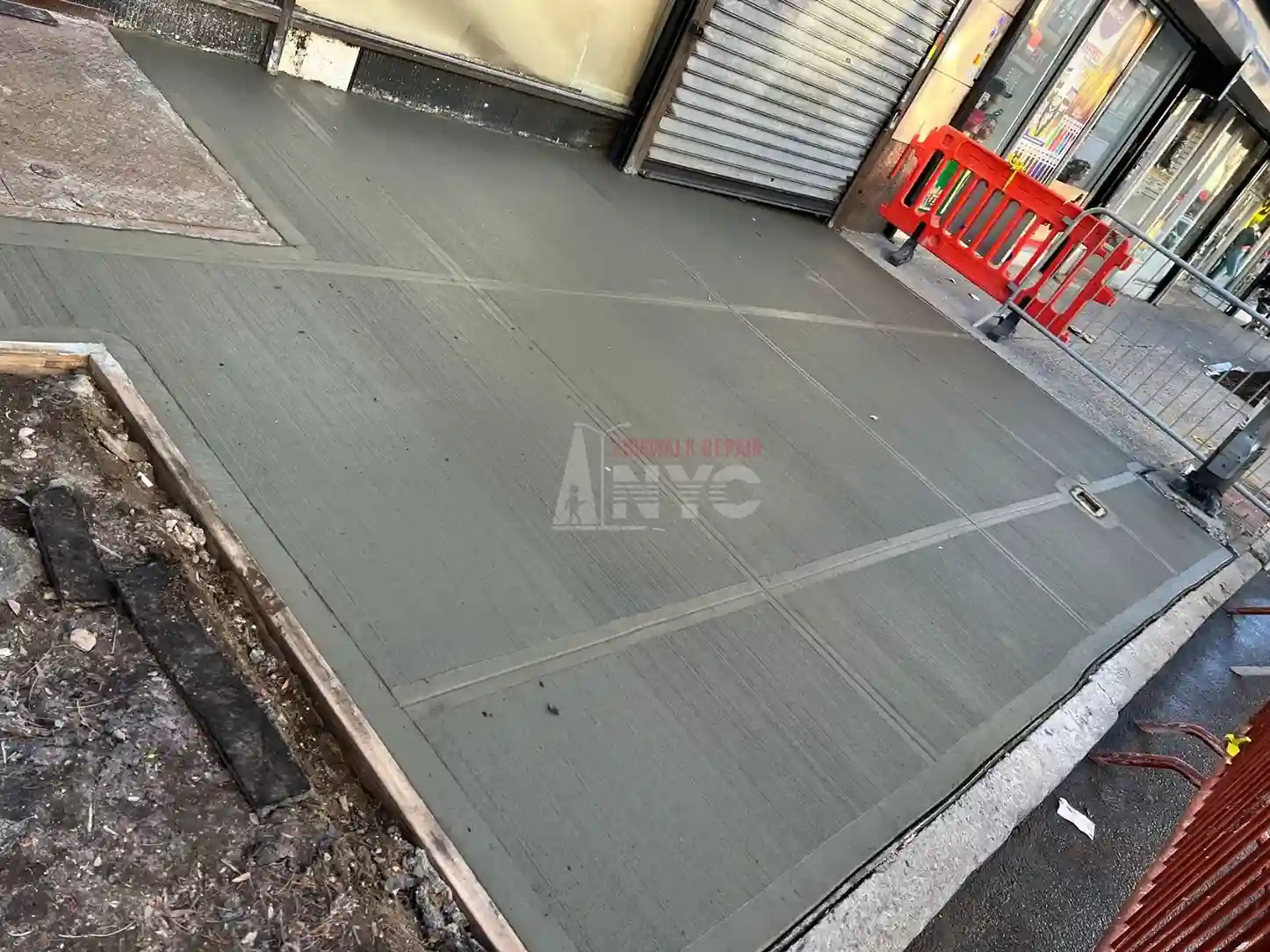
You finally did it. The crumbling, tripping-hazard sidewalk in front of your building has been torn out and replaced, the contractor's equipment is gone, and you can walk to your front door without dodging a chunk of broken concrete. It feels like the end of the story.
It isn't, though. In New York City, a sidewalk violation doesn't just disappear because the work got done. The city doesn't take your word for it, and it doesn't take your contractor's word for it either. The violation stays open on your property record until the Department of Transportation sends out an inspector, looks at the finished sidewalk with their own eyes, and signs off that it meets the code. Skip that step, and you could still be sitting on an open violation months later, one that can complicate a sale, a refinance, or just your peace of mind. If you're not sure where your case stands or what a full NYC DOT sidewalk violation removal actually involves, our licensed team can take it from here and handle the entire process for you.
The good news is that sidewalk violation dismissal in NYC isn't complicated once you know the order of operations. Here's exactly how it works, plus what a DOT inspector is actually looking for when they show up.
Why Sidewalk Violations Don't Close Themselves
Think of a sidewalk violation less like a parking ticket and more like an open permit. New York City property owners are responsible for maintaining the sidewalk in front of their property under the city code section 19-152, and when DOT flags a defect like a cracked slab, an uneven joint, or a tripping hazard, that violation sits on record until the city confirms the fix. There's no automatic close-out button. The property owner has to request the final check.
That final check is called a Sidewalk Violation Dismissal Inspection, and it's the only thing that legally clears the violation from your title. Until it happens, any DOT sidewalk violation on NYC property is considered unresolved in the eyes of the city, even if the concrete work is long finished.
Step 1: Confirm Your Paperwork Is in Order
Before you pick up the phone to schedule anything, make sure the work itself was done the right way. This is where a lot of avoidable delays happen, not because the concrete was poured wrong, but because the paperwork behind it was incomplete.
Your repair needed to be performed by a New York City-licensed contractor operating under a valid sidewalk construction permit. That permit number isn't random, but it follows a specific format, starting with a letter that identifies the borough where the work took place (M for Manhattan, K for Brooklyn, X for the Bronx, and Q for Queens), followed by a longer string of at least twelve characters that DOT uses to track the job in its system.
If you hired a legitimate, established contractor, they should have pulled this permit before breaking any concrete and can hand you the number on request. If you're not sure whether a permit was pulled, this is the moment to ask. Trying to schedule an inspection without one is the single most common reason a dismissal request stalls before it even gets off the ground.
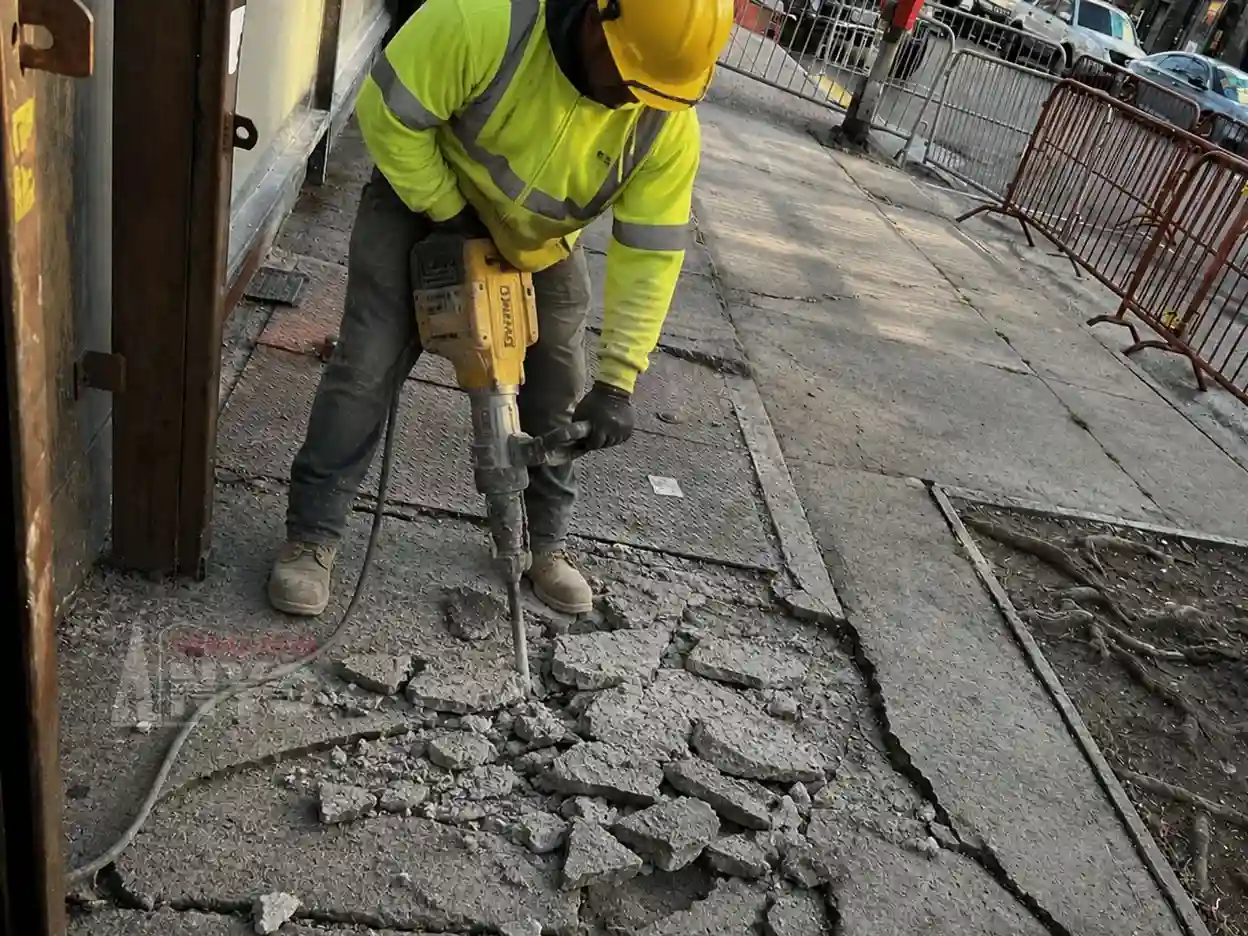
Step 2: Call 311 to Request the Dismissal Inspection
Once you've confirmed the permit is valid, the next move is simple: call 311 for sidewalk reinspection. This is the only way to formally request a DOT dismissal inspection. There's no separate hotline or online portal for this specific step, so 311 is your one point of contact.
When you call, have the following ready before the operator picks up, since they'll ask for all of it:
- The property address
- The block and lot number for the property
- The original Notice of Violation number
- Your Sidewalk Construction Permit number
- A working email address or phone number where DOT can reach you
Having this information on hand the first time you call saves you a second call later. DOT uses these details to pull up the original violation in their system and match it to the completed repair, so an incomplete answer on any of these points can push your inspection date back. For more on what documentation to keep handy, our NYC sidewalk repair FAQs cover common questions we get on this exact step.
Step 3: Prepare for and Pass the Re-Inspection
This is the step that actually determines whether your violation gets cleared, so it's worth understanding what the inspector is checking and why it matters. DOT publishes a formal checklist for this exact purpose, and going through it yourself before the inspector arrives is the best way to make sure you pass on the first try instead of scheduling a second visit.
- The sidewalk permit has been obtained.
As covered in Step 1, this is the paper trail that proves the work was authorized and done by a licensed professional. The inspector will confirm this permit is on file and matches the property before looking at anything else.
- The original sidewalk defects have actually been removed.
This sounds obvious, but it's a real checkpoint. The inspector is verifying that the specific section of sidewalk cited in the original violation is gone, not just patched over or covered. A proper repair means the damaged slab was fully removed and replaced with new concrete, not skimmed with a thin overlay.
- Expansion joints are installed, sealed, and level with the sidewalk.
This is where the craftsmanship of the job really shows. Expansion joints are the intentional gaps built into a concrete sidewalk that let it expand and contract with temperature changes without cracking. A properly built sidewalk should have them at a minimum of every 20 linear feet, at every property line, and at the point where the curb meets the sidewalk. On top of placement, the joints also need to sit flush and level with the surrounding concrete. A joint that sits too high or too low is itself a tripping hazard, and DOT will flag it just as quickly as they'd flag the original defect. Joints also need to be placed anywhere concrete of two different thicknesses meets, since that's a natural stress point where cracking starts. A contractor who understands this detail will map out joint spacing before the pour, not after.
- Detectable warning surfaces are installed on any pedestrian ramps.
If the repair touched a curb ramp, DOT is checking for those truncated dome surfaces, the raised, bumpy panels you feel underfoot at crosswalks. These aren't optional decoration, but they're a federally mandated accessibility feature that alerts pedestrians with visual impairments that they're transitioning from sidewalk to street. If your repair included ramp work and this panel is missing or improperly set, that alone can fail the inspection.
- The entire sidewalk is visible and accessible for inspection.
This one is easy to overlook. If there are parked cars, dumpsters, scaffolding, sidewalk sheds, or piles of debris blocking any part of the repaired section, the inspector can't fully assess it. Clear the area completely before your scheduled inspection window so nothing stands between the inspector and a full view of the work.
- The dismissal inspection has been properly scheduled through 311.
This closes the loop back to Step 2. The inspector will confirm your DOT violation dismissal inspection request was logged correctly with the permit number, property address, block and lot, violation number, and contact information all on file.
Walking your own property against this list a day or two before the inspection is genuinely the best way to get it approved in one visit. A repair that's technically finished but hasn't had the site cleared or has a single unsealed joint is enough to send an inspector back out for round two, which means more waiting.
Step 4: Check Your Violation Status
After the inspection, DOT updates the public record to reflect the outcome. If everything checks out, the violation is marked as dismissed and cleared from your property's record. You can monitor this directly through the NYC DOT website rather than waiting on a phone call, which is useful if you're on any kind of timeline, say, a property sale or refinance where a clean title record matters. Knowing how to clear a sidewalk violation in NYC from start to finish is really just a matter of following these steps in order and confirming each one before moving to the next.
If the inspector does find an issue, they'll typically note exactly what needs correcting, which puts you back at Step 1 for that specific item rather than the whole project.
Step 5: Keep Your Documentation on File
Once the violation shows as dismissed, don't consider the paper trail finished. Hold onto your permit records, the contractor's invoice and completion documentation, and any confirmation you receive from DOT or 311 regarding the inspection outcome. Sidewalk violations can occasionally resurface in title searches or municipal record pulls even after dismissal, and having your documentation organized means you can resolve any confusion in minutes instead of starting the whole process over, and it also supports any NYC sidewalk lien removal steps if a lien was ever placed against the property. It's also worth keeping this file if you plan to sell the property. Buyers' attorneys will often ask for exactly this kind of proof during due diligence.
If you're budgeting ahead for the repair itself, our sidewalk repair cost guide breaks down what to expect before you ever get to the dismissal stage.
Let The Sidewalk Repair NYC Handle Your Dismissal Request
At The Sidewalk Repair NYC, sidewalk violation removal in NYC is what we handle every day, from the first pour of concrete to the dismissal inspection request and the final sign-off from the city. We don't just fix the sidewalk and walk away. Before we ever pick up the phone to request an inspection on your behalf, we go through the same checklist DOT uses ourselves, so nothing gets missed. We inspect our own work before the city does, catching anything that could hold up an approval so you're not the one finding out about it after a failed visit.
If you've already been through a failed inspection once or twice. Don't let it sit and chip away at your property value while you figure out the next move. Give us a call for a free estimate, and let us get it done right the first time.
Frequently Asked Questions
How long does a sidewalk violation dismissal inspection take after I call 311?
There's no fixed citywide timeline, since it depends on DOT's current inspection backlog and which borough you're in. Some property owners get scheduled within a few weeks, while others wait longer during busy seasons. Calling 311 with your permit number, violation number, and block and lot ready from the start is the best way to avoid unnecessary delays on your end.
What happens if I don't request a dismissal inspection after finishing the repair?
The violation stays open on your property record indefinitely. It won't clear itself just because the concrete work is done, and an open violation can surface later during a title search, sale, or refinance, creating headaches you could have avoided by closing the loop right after the repair.
Can I request the dismissal inspection myself, or does it have to go through my contractor?
Either the property owner or the contractor can call 311 to request it, as long as whoever calls has the permit number, violation number, and property details on hand. Many contractors handle this step on the owner's behalf as part of the full repair job, which is one less thing for you to track down.
Will I be notified if my sidewalk fails the dismissal inspection?
Yes. If the inspector finds an issue, DOT typically notes exactly what still needs correcting rather than failing the entire job outright. You'll need to fix that specific item and then request a re-inspection, which puts you back into Step 3 rather than starting completely over.