
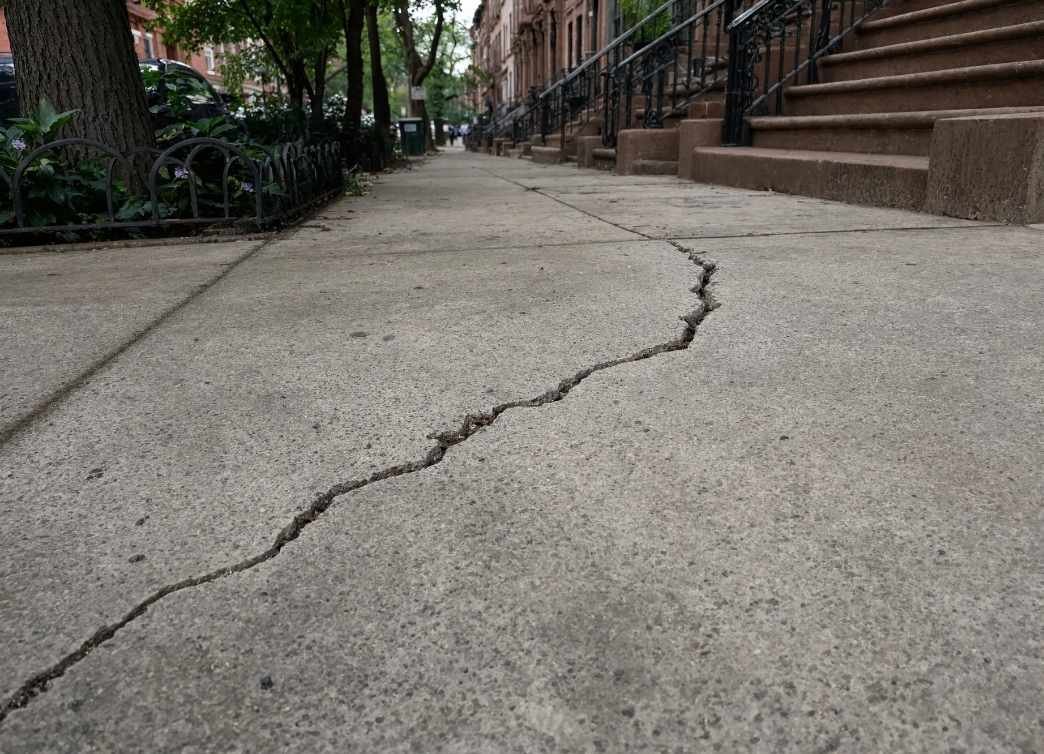
If you have ever walked out your front door and noticed a new crack running across your sidewalk, you are not alone. Almost every property owner in New York City deals with this at some point. Sidewalks here take a real beating between the weather, the trees, and decades of foot traffic, so cracks show up more often than most owners expect.
The tricky part is knowing what to do about it. Some cracks are cosmetic and can wait. Others are a sign of a bigger problem underneath, and if the city catches them first, you could end up with a DOT violation and a deadline to fix it. This guide walks through why sidewalks crack in NYC, how to check your own sidewalk, what repair actually costs, and when you need a permit before touching the concrete.
What Causes Sidewalk Cracks in NYC
Sidewalks do not crack for no reason. There is almost always a cause underneath the surface, and once you know what to look for, it gets a lot easier to figure out what is going on with your own property.
Freeze and thaw cycles are one of the biggest culprits. Water gets into small pores in the concrete, freezes, and expands, which pushes the concrete apart from the inside. New York winters put a sidewalk through this cycle again and again, sometimes multiple times in a single week during a cold snap, so even a well built sidewalk takes damage year after year.
Tree roots are another common cause, especially in older, tree lined blocks across Brooklyn, Queens, and parts of the Bronx. As a tree grows, its roots spread out and push against whatever sits above them, including a slab of concrete that is only a few inches thick. Certain species common on NYC streets, like London planetrees and honey locusts, are known for aggressive surface roots that cause this exact problem. You will often see it show up as a crack running at an angle, right where a root has lifted one side of the flag higher than the other.
Poor subbase work is a less obvious cause, but it is a big one. If the compacted base under the concrete was not done properly when the sidewalk was first installed, the ground underneath can settle unevenly over time. That uneven settling puts stress on the slab above it, and eventually something gives, often in a spot with no obvious explanation on the surface.
Age plays a role too. A lot of NYC sidewalks are decades old, and concrete does not last forever. Even a slab that was poured correctly will start to show wear after enough years of expansion, contraction, and general use.
And then there is heavy load. Driveway aprons and sidewalks near loading areas take a lot more stress than a typical stretch of pavement, since cars and trucks pass over them regularly. If that section was not poured to the right thickness for the load it carries, cracking shows up faster than it would on a standard section of sidewalk.
If you want the full breakdown of how these causes play out block by block, we get into that in more detail in why do sidewalks crack in NYC, which is a closer look specifically at the root causes side of this. It also covers something a lot of owners do not realize: not every visible line in a sidewalk is damage. Expansion joints, the straight lines you see cut into a sidewalk at regular intervals, are built in on purpose to control where cracking happens. They let the concrete move slightly without cracking randomly across the slab.
A Quick Way to Check Your Own Sidewalk
Before calling anyone, it helps to know what you are looking at. Here is a simple check you can do yourself in a couple of minutes.
Walk the length of the crack and run your hand flat across it, from one side to the other. If you feel a clear step, even a small one, that is a height difference, and it matters more than the width of the crack itself. Next, look at whether the crack runs in a straight line or branches out. A single straight crack is usually less concerning than one that has started to spread into multiple smaller cracks, since that pattern often means the slab underneath is breaking down rather than just settling.
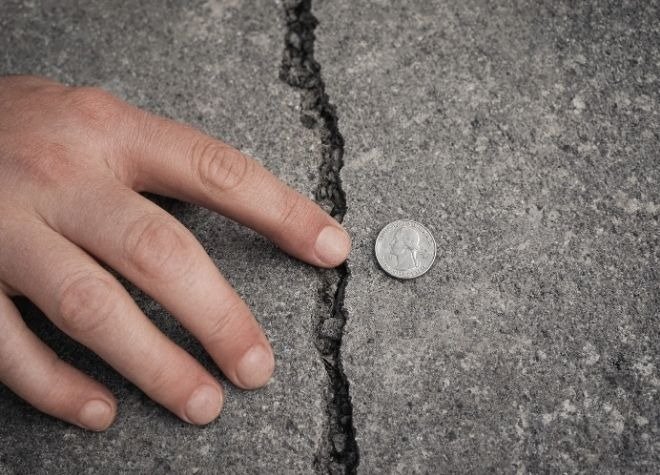
Take a photo with your phone next to a coin or a ruler for scale. This gives you something to compare against later if the crack changes. It is also genuinely useful if you end up calling a contractor, since it lets us get a rough sense of the damage before we even step on site.
Cosmetic Crack or Structural Problem? How to Tell the Difference
Not every crack means you need a full repair. The real question is whether the crack is just cosmetic or whether it points to something structural, and the hand test above is actually the fastest way to answer that.
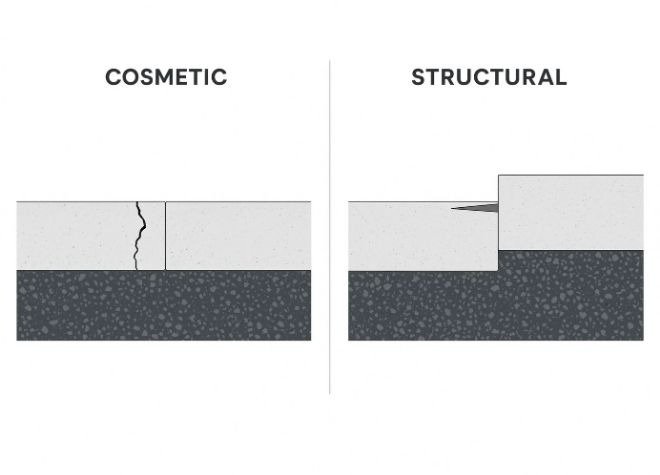
A hairline crack that is flat, with no height difference between the two sides, is usually cosmetic. It might not look great, but it is not creating a hazard, and on its own it is not likely to trigger a violation.
The bigger concern is a crack where one side of the concrete has settled or lifted compared to the other. Under NYC Administrative Code 19-152, a height difference of half an inch or more between adjacent sections of sidewalk counts as a trip hazard, and DOT inspectors are specifically trained to look for exactly this. If your crack has any noticeable step when you run your hand across it, treat it as a structural issue rather than a cosmetic one, even if it does not look dramatic from a standing position.
Width matters too, though less than most people assume. A wide crack that is still flat is usually still a lower priority repair. A narrow crack with a height difference is the combination that actually gets flagged during inspection, which surprises a lot of owners who assumed a bigger looking crack was automatically the bigger problem.
If you already have a Notice of Violation in hand, the crack has already been classified as a problem by the city, and you are working against a clock. Our guide on what to do when you receive a DOT sidewalk violation walks through that process step by step if that is where you are right now.
How We Repair Cracked Sidewalks
The right fix depends entirely on how bad the damage actually is. There is no single answer that applies to every crack, which is part of why a lot of DIY attempts end up needing to be redone by a licensed contractor anyway.
For small, flat, hairline cracks, sealing or filling the crack is often enough. A proper concrete sealant keeps water out, which slows down the freeze and thaw damage that caused the crack in the first place, and it can buy real time before a bigger repair is needed. This is genuinely a valid option for the right kind of crack. We cover exactly when sidewalk crack filler actually works, and when it does not in more detail, since this is one of the more misunderstood parts of sidewalk maintenance.
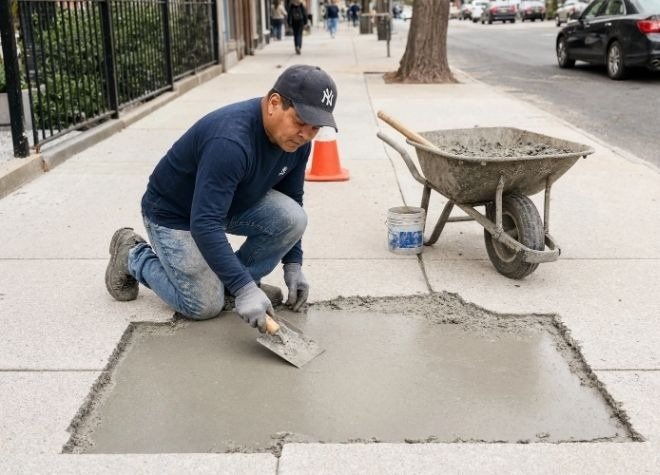
For moderate damage, patching a section of the slab can work without needing a full replacement. This is common when the crack is contained to one area and the rest of the flag is still in reasonably good shape. A patch involves cutting out the damaged section cleanly, tying in new concrete at the edges so it bonds properly, and finishing it to match the surrounding surface as closely as possible.
For structural damage, meaning a real height difference, a section that is crumbling, or a crack that keeps coming back after a patch, full flag replacement is usually the right call. This means removing the damaged concrete down to the subbase, checking that the base itself is properly compacted, and pouring a new slab that meets current DOT specifications for thickness and mix strength. It is more work than a patch, but it is also the only real fix when the underlying problem, not just the surface, is what caused the crack.
One thing worth knowing before you hire anyone: not every repair is done correctly the first time, even when it looks fine right after the crew leaves. Skipping subbase prep, using the wrong concrete mix, or pouring in bad weather are all mistakes that show up later as a new crack in the exact same spot. Our post on common mistakes to avoid when repairing sidewalks in NYC covers this in more detail if you have had a repair fail on you before.
What Sidewalk Crack Repair Costs in NYC
Cost is usually the first thing property owners want to know, and it is a fair question, since pricing in this city varies more than people expect.
Standard concrete sidewalk repair in NYC typically runs ten to twenty five dollars per square foot. The exact number depends on the extent of the damage, the material used, and site conditions like nearby tree roots or how easy the area is to access. Small slab jobs generally start at a flat eight hundred dollar minimum. Even a small repair still requires mobilizing a crew, pulling a permit if one is needed, and meeting the same DOT specifications required on a larger job.
Crack sealing on its own, without any concrete replacement, is usually the least expensive option, since it does not involve breaking out and repouring concrete. Patching sits in the middle. Full flag replacement is the most involved and costs the most, but it is also the only option that fully resets the clock on that section of sidewalk.
If you want a full breakdown of current pricing by job size and repair type, our sidewalk repair cost guide covers this in more detail and gets updated as pricing shifts.
Do You Need a DOT Permit for Sidewalk Crack Repair?
This is where a lot of well meaning property owners run into trouble. In NYC, any sidewalk repair that involves replacing a concrete flag requires a DOT permit, even if you are hiring the work out to someone else. Simple crack sealing on a flat, cosmetic crack generally does not require one, but full or partial flag replacement does.
Skipping this step is one of the most common mistakes we see. A repair that looks fine on the surface can still fail inspection later if it was done without the proper permit. That means paying for the work twice: once for the original job and again to bring it up to code. It is also worth knowing that a licensed contractor typically handles the permit filing directly, so this is not something you need to figure out on your own if you hire the work out.
If you are dealing with an active violation, the permit process is tied directly to your repair timeline, and there is a hard deadline attached. Our guide on how to appeal a NYC sidewalk violation is worth a look if you think the violation itself was issued in error, since repair is not always the only path forward.
How Long Does Sidewalk Crack Repair Actually Take
Timeline depends on the same thing cost does, which is severity. Crack sealing can often be done in under an hour for a single crack. A patch typically takes a few hours to a full day, depending on the size of the section. Full flag replacement takes longer, not because of the pour itself, but because of curing time. Fresh concrete needs time before it can handle foot traffic or be exposed to the elements without risk. Our post on how long a concrete sidewalk takes to dry breaks down realistic timelines if that is the repair you are looking at.
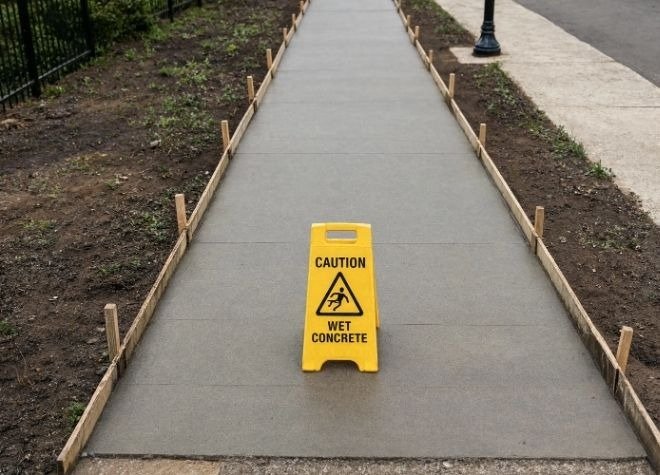
If you are working against a DOT deadline, timeline is not just a scheduling question. It is a compliance one too, so it is worth flagging your deadline upfront when you request a quote. A contractor who knows you are on a clock can prioritize the job differently than one working through a general queue.
Get Your Cracked Sidewalk Fixed the Right Way
A cracked sidewalk rarely gets better on its own. Left alone, a small cosmetic crack can turn into a structural one, and a structural one can turn into a violation with a deadline attached. Catching it early, and understanding whether you are looking at a quick fix or a full replacement, saves both money and stress down the line.
The Sidewalk Repair NYC has handled this kind of work across Manhattan, Brooklyn, Queens, and the Bronx for years, from a single cracked flag to a full sidewalk replacement tied to a DOT violation. We handle the concrete repair work, the permits, and the paperwork, so you are not stuck figuring out DOT specifications on your own. If your crack is already tied to a violation, our sidewalk violation removal team handles that process from start to finish.
If you are not sure which category your crack falls into, reach out for a free inspection and we will tell you straight what it actually needs.