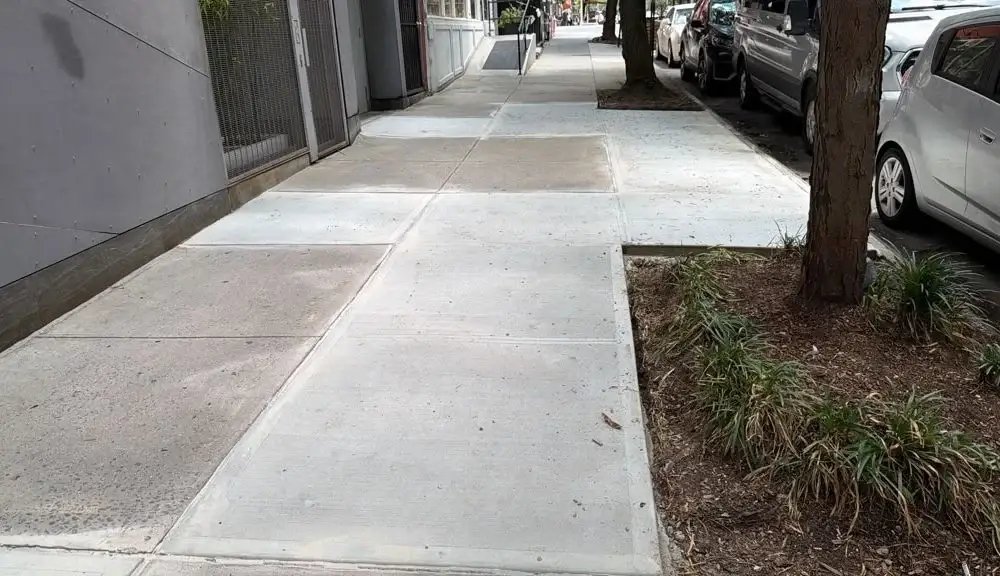
Property Type: Mixed-use Residential Property
Property Location: 425 W 53rd St, Manhattan, NY
Project Type: Coordinated sidewalk restoration across Hell's Kitchen Corridor and sidewalk violation removal in Manhattan, NY
Total Area Repaired: 42 slabs with approximately 1050 square feet
Estimated Project Cost: $22 per square foot
Project Timeline: Completed within the 75-day correction period specified in the violation notice
West 53rd Street in Hell's Kitchen never really slows down. It's a busy stretch of co-op buildings and rental apartments, with people constantly moving between Midtown and the Hudson River waterfront. But under all that foot traffic, the sidewalks had been quietly falling apart for years. Tree roots from the neighborhood's old street trees had pushed up through the concrete, and decades of wear and settling left slabs cracked and uneven across several buildings in a row.
This wasn't just one property's problem. Up and down the block, about 42 slabs, roughly 1,050 square feet, had gotten bad enough to be a real tripping hazard. And since each stretch of sidewalk technically belongs to whoever owns the building behind it, that meant co-ops, landlords, and individual homeowners were all sitting on their own piece of the same problem.
Why Doing Nothing Wasn't an Option
A cracked sidewalk in a busy part of Manhattan isn't just an inconvenience for passersby, but it's a liability waiting to happen. Every owner on this block had their own exposure to a DOT violation, which means fines, and the risk of the city stepping in to do the repair themselves (usually at a much higher cost). For co-op boards, that risk gets shared across the whole building. For landlords, it's the kind of thing that turns into a lawsuit if someone trips and falls. And since the tree roots causing the damage were still actively growing, waiting any longer just meant more cracking and more risk with every season that passed.
The Hard Part, and How We Got Past It
This wasn't a simple one-property job, and a few things made it more complicated than usual:
Several owners, several permits, one sidewalk. Normally we're dealing with one property owner and one permit. Here, we had multiple separate buildings, each needing its own sidewalk construction and sidewalk closing permit filed individually. The tricky part was keeping everything moving together so one building's paperwork didn't hold up the rest of the block.
Roots that didn't care about property lines. Tree roots don't stop just because a property line says so. Damage under one building's sidewalk often stretched right into the next one over. We had to look at the whole corridor's root activity together, not just frontage by frontage, so fixing one section wouldn't just push the same root problem next door.
Keeping the sidewalk open while we worked. With this much foot traffic heading to and from Midtown all day, we couldn't shut the whole corridor down at once. We worked section by section, always leaving a safe path open, and timed the noisier work around when the block was quieter.
Getting everyone on the same page. Co-ops, landlords, and homeowners don't all move at the same speed when it comes to signing off on permits and estimates. We worked with each owner on their own schedule but still managed the bigger picture so the finished sidewalk would look like one smooth, level corridor instead of a patchwork of mismatched fixes.
Treating the whole block as one project, while still respecting that each building had its own paperwork and its own owner, is what let us get everyone repaired without anyone falling behind.
How The Sidewalk Repair NYC Got it Done
We assessed each property separately and filed permits individually per building, in line with NYC DOT requirements, at a combined cost of $140 per property.
Once those approvals came through, our crew worked down the corridor section by section, tackling the root damage and cracked slabs, replacing what needed replacing, and rebuilding the ground underneath where roots had weakened it. By the end, all 42 slabs across roughly 1,050 square feet were brought up to current DOT standards, with safe pedestrian paths kept open the whole time.
What the Block Looks Like Now
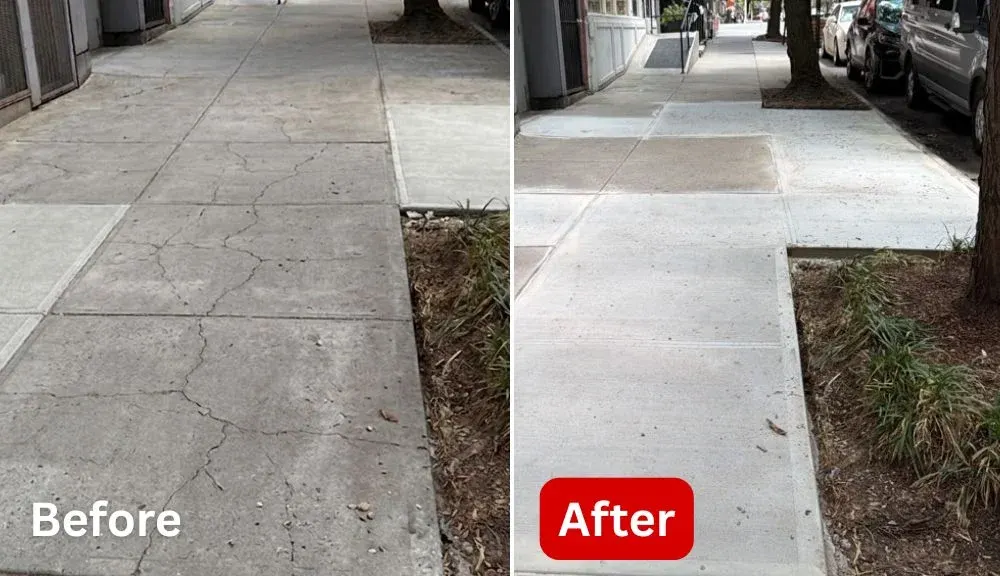
- All damaged slabs replaced across several different buildings, about 1,050 square feet in total
- Total cost worked out to $22 per square foot, $23,100 for the corridor, plus $140 in permit fees per property
- Every DOT violation risk on the block resolved, building by building
- One smooth, level, hazard-free sidewalk running the length of West 53rd Street
- Lower liability risk for co-ops, landlords, and homeowners across the whole stretch
Hearing It From the Owners
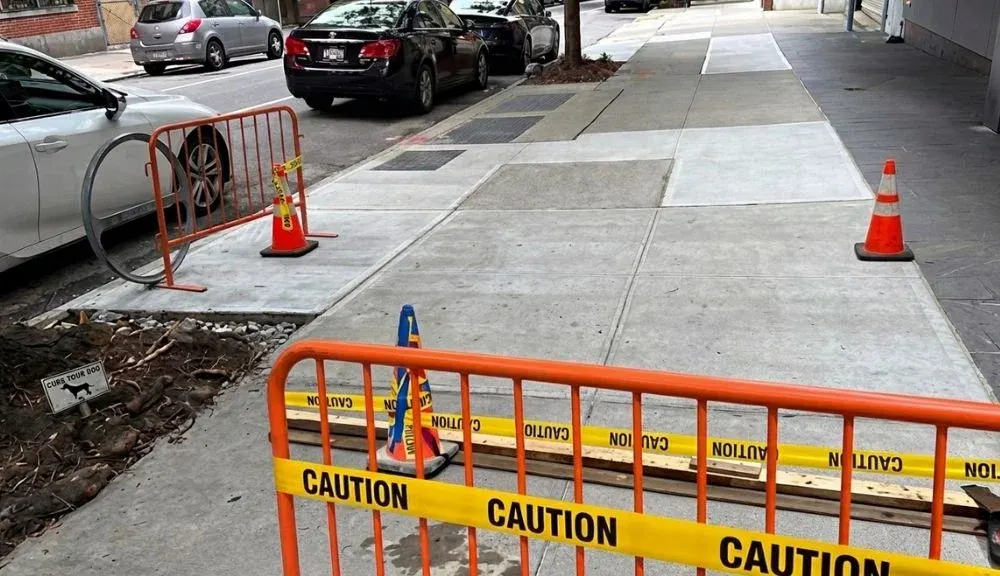
For the owners on this block, the real win wasn't just getting their sidewalk fixed, but it was not having to figure out the permits and scheduling on their own while every neighboring building was dealing with the same thing at the same time.
"We knew our section needed work, but trying to coordinate it with all the other buildings on the block felt like a headache before we even started," one property owner shared. "Having one team handle our permits and our repair, while the rest of the street came together at the same time, made the whole corridor finally feel safe again."